

S15 Episode 1: Don’t Make Rules - Make Conversations: Raising Cyber-Smart Kids // Kae David and Chad Rychlewski
Hosted by Hillary Wilkinson
“We highly recommend (obtaining) a VPN. It makes sure that unwanted eyes aren’t monitoring your activity or….capturing information.”
~ Kae David
Healthy Screen Habits Takeaway
Resources
For More Info:
Instagram @cybersecurityparents
Cybersecurity Parents' website and blog
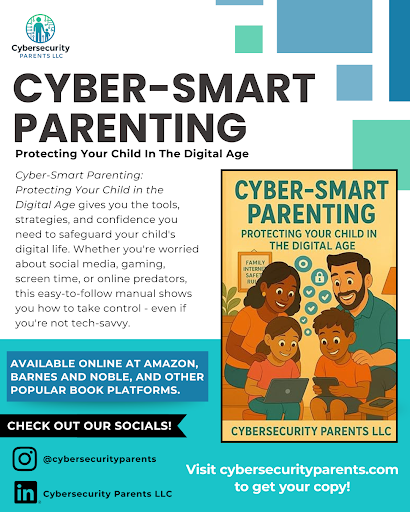
Get Kae and Chad's book here!
Show Transcript
Hillary Wilkinson: (00:42)
So many times, starting from the very first day, I brought my babies home from the hospital, the thought “I wish I had a handbook” entered my brain!. And the world of technology with kids is no different, which is why I am so excited to talk today to the authors of the handbook that many parents have been hoping for Cybersmart Parenting Protecting Your Child in the Digital Age is a digital safety handbook designed to help parents set controls, use security tools, protect family privacy, identity, and so much more. It's written specifically for busy parents, parents like us. This guide makes complex topics simple and helps parents feel empowered, not overwhelmed. So critical. Welcome to Healthy Screen Habits, Chad Rychlewski and Kae David,
Chad Rychlewski: (01:41)
Thanks for having us. Yay.
Kae David: (01:43)
Thank you so much for having us. We're happy to be here.
Hillary Wilkinson: (01:46)
Chad, you have worked in cybersecurity for more than 16 years, and what led you to want to write this handbook now?
Chad Rychlewski: (01:56)
So, I, I work a lot with schools, so the K through 12 systems, higher education, but I, I see what they do at school. I also see what I have to do at home. Based off some of that information with my four and 8-year-old sons. I'm trying to help further educate them. They go out to little league games and other activities. I meet parents and they all have very similar questions. What can I do to protect my kids online? Is really what it comes down to. So we, we looked out in the market and saw that there's a lot of big books that are 500 plus pages and have a lot of really big words. We wanted to simplify it a bit more. Uh, and that's really where my passion for this book came from, is making sure that we had a simple, practical, tactical guide for parents.
Hillary Wilkinson: (02:38)
And it is, it's so approachable. It's very real person language for real. Parents on the street, , , and Kae. You've done everything from advising multinational organizations to mentoring parents on digital best practices. In your experience, is there one area or an area that you see as the biggest stumbling block for parents with their, with their digital best practices?
Kae David: (03:07)
To like boil it down to one? I would say that the biggest stumble is actually talking to your kids about online security. Uh, which seems so silly that that's the one. Um, but in our research for the book, we found that on average, um, parents only spend a total of 46 minutes talking to their children about online security through their entire childhood. So from ages zero to 18, 46 minutes total. And yet so many kids have access to so many different devices. So being able to just talk to your kid about their online security and safety, that's the biggest fumble is having those conversations, which a lot of parents don't even know where to start. 'cause it can be overwhelming. So that's why when we were writing our book, we wanted to have at the end of each chapter just different kind of talking points or conversation starters, because it's really hard to be like, so what do you know about a VPN my 8-year-old child? Um, or anything about like, what is your digital footprint? So we have a lot of conversation starters in our book that parents can take so that they talk to their kids about their online security.
Hillary Wilkinson: (04:19)
And I, I love how you break it down and have those kind of, um, just little bite sized amounts of conversation because I think it becomes overwhelming as a parent when you're, you're like, oh, I've got this big topic that really needs coverage, so I'm gonna sit down and she said, 46 minutes, we're gonna bust out an hour conversation right now. You know, that's,
Kae David: (04:44)
Yeah.
Hillary Wilkinson: (04:44)
As it turns out, as it turns out, that's not effective, right? No. So yeah, there's a phrase, um, that I know Chris McKenna over at Protect Young Eyes likes to use, and he says, drips not drownings. Right? Like, you, like lots of drips along the way, and I, I liken it to staying hydrated, right? Where it's like, you cannot drink a gallon of water on Sunday and think you're gonna be fine come Wednesday. So it's lots of little conversations all along the way, and I think you that's, it's awesome that you guys break it down so well. You tee tease it apart that way.
Chad Rychlewski: (05:24)
It's different by age group too. If I can add onto that for a second. Um, there's a couple different graphics in the book that walk through what you should talk about for an elementary student, how that evolves into the middle school. And it's very different when they get to high school. So the basics of a password when you're in kindergarten, first grade versus, hey, you're about to apply for a job. Let's talk about your digital presence and what that looks like holistically. Right? So that, and at the end of every chapter, there are four different actions you can take five to 15 minutes, we spell out how long it should take, but it's a checklist that even I'm still working through, right? I have an 8-year-old, I'm not all the way to high school yet, but as I go through the, the rereading, the book that we wrote, I'm checking those things off and making sure that I'm doing the same thing.
Hillary Wilkinson: (06:08)
I love it. I love it that, um, you're living it as you're, you kind of have your own your own lab . Yeah. You know, I mean, not to boil it down, that makes it sound very clinical, but, um, I agree with you and I think anyone who, you know, people who are parents at this age, typically, maybe they can remember signing up for, for an email address mm-hmm . And I can remember, I mean, I, this will age me, but I was in grad school by the time we were getting, you know, assigned email addresses. You know, a lot of those email addresses as it turns out, didn't translate so well in the professional world, , you know, you know? No, yeah. It's, yeah. So, I mean, even having, you're, you're talking about passwords with little guys, but I'm thinking Yeah. Online names or, you know, meow, meow isn't, isn't gonna really be your best, best choice.
Kae David: (07:07)
It didn't choice, it didn't go well in corporate. Okay. Alright. I think I need to update my email soon. . Yeah.
Hillary Wilkinson: (07:15)
Shocking . Yeah. Okay. When we come back, we're gonna talk more about these digital best practices and how every parent can strive to keep them.
HSH Ad: (07:25)
Diving into the world of smartphones can be a wild ride for kids and parents alike. Whether your child is getting their first smartphone or has had one for a while, chances are they're still figuring out the do's and don'ts of using a smartphone wisely. Our book is here to help healthy screen habits for tweens and teens. A training workbook to help you use your phone wisely is the tool your child needs to navigate life in the digital world. From tackling poor phone etiquette to addressing social media anxieties and online safety concerns, we have your child covered, written, especially for adolescents. We've put together all the information, tips, hacks, and rules to ensure that your child's phone is a useful tool that they control not the other way around. We explain the whys behind the rules of phone use. We show your child the possible traps and dangers to watch out for how to prevent them and how to fix them.
HSH Ad: (08:19)
If your child has made a mistake, we give your child the five core healthy screen habits to use daily, protecting them from some of the worst mistakes tweens and teens make while using their phones. This workbook will teach your child how to use their phone as a tool to help them do great things in their one amazing life, and it will make your life so much easier. At the same time, packed with colorful graphics and easy to read content. This resource is a game changer for kids. Don't miss out. Buy your copy of Healthy Screen Habits for tweens and teens on amazon.com. Today
Hillary Wilkinson: (08:58)
I'm speaking with Chad and Kae, the co-authors of Cyber Smart Parenting, protecting Your Children in the Digital Age, and the folks behind cybersecurity parents, LLC, with the mission of empowering families to navigate the digital world safely. These two are experts on online protection, and I would like to know, are there any golden rules that you would like parents to know about for protecting their kids or their families in this digital age that we're all living?
Chad Rychlewski: (09:34)
So we were talking before the break about, um, having a lot of conversations and how we grew up with computers as they evolved. So we were being taught about the internet, we were taking typing classes. I saw the giant floppy shrink down to the tiny floppy shrink over to the CD and so on. So we learned with technology, what parents need to realize today is that the, the, the staff at schools, the teachers, they don't always have the time to teach the basics anymore. They're being given Chromebooks, uh, laptops, tablets in kindergarten, sometimes first grade, and so on, but they don't have the basics. So the conversation piece is super important. Part of the book. We have on page 77, there's a tech contract. So why all this conversation's important, filling out that tech contract. It's not about making rules. So that's our, our golden rule is don't make rules. We don't want to make rules. We want to have a conversation. Explain to your children why they can get their device for so many hours. Right. Why they can only get it in certain times of the day. Why you set passwords, explaining some of the technology behind it, helps them further understand it, then it's not just because I said so. Right.
Hillary Wilkinson: (10:44)
Totally. Yeah. I think the, um, the explanation, the, and it's kind of that connect before you correct with mm-hmm . Parenting mm-hmm . I think you get, you get further down the road with it. So I, yeah, I love that we too have a, uh, family tech plan that is different, different than yours, but it's our free downloadable tool that is meant to be in ages and stages, like living, living kind of thing that mm-hmm . Grows with your family. So I think, um, the big thing that I like to remind parents is, you know, there people wanna know like, what's the best one? What's the best family tech planner? What's the best contract? What's the best, you know, and I'm like, that's like me telling you what's the best car, you know, like the best car for you as a mom of four soccer players who, you know, you need to be changing in the back, you know, and everything.
Hillary Wilkinson: (11:48)
Maybe a minivan. I, I don't have that need. I, I have at this point a black Labrador who goes with me and, you know, I can drive a much smaller car. So the, it's the important part is to have a plan. That being said, I think having the one stop shop within your book is very critical, so , so I recommend checking out that page 77. So one of the things also that I like about your guys' website for cybersecurity parents, LLC, is that it has access to your blog. And one of the posts I'd like to highlight, uh, was written by you, Kae, it was the five easy Steps to set up Your own VPN. Can we break that down a little bit? First, what is A VPN?
Kae David: (12:39)
So first off, A VPN stands for a virtual private network, and it essentially is a secure tunnel, um, between your device and the internet. So think of it as literally that, uh, a secure private tunnel between your device and the internet. And so it encrypts your data and protects your online activities from potentially unwanted eyes or threat actors. So think of, you know, a lot of times people will go to coffee shops, you know, I love my good coffee. Um, and you'll connect to the, the public wifi, for instance. So your device is being connected to that public wifi, or maybe they even have that nice password, 1, 2, 3 that you have to connect to to get to their wifi. Um, and then you go and check your bank account on their wifi because you know, why not? Um, what happens is, first off, we highly advise not to connect to public wifis, especially ones that have password, 1, 2, 3, um, or the establishment's name in the wifi password. Um, but a virtual private network can help you connect your device so that unwanted eyes can't monitor your traffic or see your IP address. Um, and so we highly recommend a VPN because it just makes sure that unwanted eyes aren't monitoring your activity, or, um, potentially threat actors are capturing information from your device because it is unsecure, um, or insecurely connected to the internet.
Hillary Wilkinson: (14:11)
Okay. So, I'm sorry to be so slow on this, but I, um,
Kae David: (14:15)
No, we love it. That's why we're here.
Hillary Wilkinson: (14:16)
Okay. I was gonna say, I feel like if somebody, uh, you know, if somebody is listening to this, they, they probably are starting at a point, like, I am so , but so when you have a VPN, is it device specific or, so it's device specific, not location.
Kae David: (14:35)
Um, so it can, you can actually connect, uh, multiple devices to a VPN. Um, so it's showing where you're coming from, so to speak. So each, each device almost has their identifier, and it shows also where they're coming from. So think about like your mobile device on your wifi, connecting to the internet, it shows your location. Mm-hmm . It shows that you're connecting from us, for instance. Um, and so A VPN allows that secure tunnel. So you can actually choose, let's say I want it to show that I'm coming from like Mexico, not us. Um, so it has that private tunnel where it doesn't necessarily show your location, and it doesn't show your device specifically as well.
Hillary Wilkinson: (15:22)
We have like layers of protection, right? That we talk about with, um, with when we're, when we're talking to families about protecting your family for in our digital age. And one of the things that we talk about is using is a network router. And so we've recommended that as a tool. Is this, that, that's why I'm, I'm kind of like, is this something, but that's something that is within the house, private VPN something that would be used in conjunction with the router, or is it better, is one better than the other? I,
Kae David: (16:01)
That's a good question. So you should have a secure router. So that's definitely, think of it as like, um, different layers of protection, right? Mm-hmm . So if you have a router that is securely configured, that's awesome, and that's like one layer of protection as well. Um, but you might still be able to pick up that in your router, like that's where the location of the router is, and that's the specific device, so people can still see who you are mm-hmm . And potentially even where you're going from your router. So A VPN allows that private tunnel remember mm-hmm . So for instance, it, it makes it so it's harder to see slash they can't see who you are coming from that router and they can't see where you're going from that router. Um, so that's another layer of protection. So we always call it, uh, defense in multiple layers.
Kae David: (16:53)
So you wanna be able to have a multi-level defense, um, so that you can protect your family, um, to, to simplify it in a certain way. It's almost like if you go to lock your door for your house, that's one layer of protection. Um, but you also might want to, uh, turn your alarm system on as well. So if someone breaks through the door, you still have something that can con, uh, trigger and call the police, for instance. So you don't wanna just rely on locking the door to protect your house. You wanna lock the door, but you also wanna have your alarm system in place. So you wanna have a secure router, but you also wanna have that private network, or the virtual private network as a VPN to make sure that you're securing your devices as well. Does that help explain it? It's that multiple level of production
Hillary Wilkinson: (17:43)
For me. It does, yeah. Okay. And then within the, uh, the blog post, and I'm gonna link all your, um, I'll link your website as well as the connections to your book and everything in the show notes, um, so people can go back and find it. So, and you can find this blog post very easily so you can follow Kay's recipe for VPN success, but
Kae David: (18:06)
Love it.
Hillary Wilkinson: (18:07)
So , so you, you break it down into five steps. And I have to ask, is it really that easy? Or like, I mean, is it like this that, to use that recipe analogy, you know, many, many is the Instagram recipe that, like they say, it took him like 15 minutes and here I am three and a half hours later going, , you know, my kitchen is covered in whatever. So is it, is it really five steps? ?
Kae David: (18:35)
It's five. I think it's actually a really easy recipe to follow. Um, but there are some substep in one step, and what I'm referring to is really choosing the right VPN solution. Um, and the reason why is similar to earlier you said, look, I I can't tell you what is the best car to buy. Like, there's not just one car that everyone should buy, and that's it. It really depends on your need and what you need it for. Um, whether it's, you know, cross country journeys or if you're just going down the street with your family. It really depends on the specifics of your family and your needs. So step two is choosing the right VPN solution. So that one is the one where you have to decide, was it, what is it that your family needs for the VPN? Um, and I'll give an example using my own experience.
Kae David: (19:23)
Um, I travel a lot, um, and I most recently actually went to China, uh, which is probably, um, one of the biggest places where, you know, there's a thing called known as the Great China firewall, um, where it's really hard to access certain applications when you're in China. So think through, for instance, like WhatsApp. Mm-hmm . Um, you don't really, uh, have WhatsApp in China. You have WeChat, Alipay, other applications. But if I wanted to access WhatsApp so that I could contact my family while traveling there, I would need a VPN. So I actually configured and decided that, uh, VPN that was best for me. And the VPN I used, this is not sponsored again, choose what is best for you. Uh, but I used what's called Nord VPN, which is really popular amongst people who travel a lot. Um, and so it was really easy to configure.
Kae David: (20:19)
They have, like, I, I bought it off of the application store, so you do buy it, um, and then you can configure it and download it onto your mobile device, and then they talk you through how to activate the VPN. And then it was easy peasy lemon squeezy. Once I activated the VPN, I was able to access WhatsApp via my phone and contact my family. So it was really, uh, like five steps for me to follow. Um, the only double click step is choosing the right VPN for your family and what you're trying to use it for.
Hillary Wilkinson: (20:52)
Okay. Well, I love your thorough answer. Thank you very much for taking the time to walk me through it, because I always have questions. So, , we have to take a short break, but when we come back, I am going to ask cybersecurity parents for their healthy screen habit.
Hillary Wilkinson: (21:11)
From brand new parents to parents of teens who already have their own smartphones. Healthy Screen Habits presentations can help you navigate parenting in this digital age. We cover topics like creating your own family tech plan with a template that helps you guide your conversations and how to improve our kids' mental health through healthy screen habits. If you have a book club Bunco group, or even a group of neighborhood moms that you'd like to gather together for creating a plan on how your kids are going to play together, grow together, and what apps to look out for, let's have a moms night in person or virtual presentations are available, reach out to us at healthyscreenhabits.org, click the book a speaker button and let's get the fun started.
Hillary Wilkinson: (22:08)
The book is Cyber Smart Parenting, Protecting Your Child in The Digital Age, and the authors, Chad Rychlewski and Kae David are here with us today. It was written
Hillary Wilkinson: (22:20)
For parents
Hillary Wilkinson: (22:21)
To educate themselves on cybersecurity best practices for their kids, and how to teach them to be cyber smart and protect themselves. As you know, every episode of the Healthy Screen Habits podcast, I ask for a healthy screen habit. This is going to be a tip or takeaway that listeners can put into practice in their own home. What is yours?
Chad Rychlewski: (22:46)
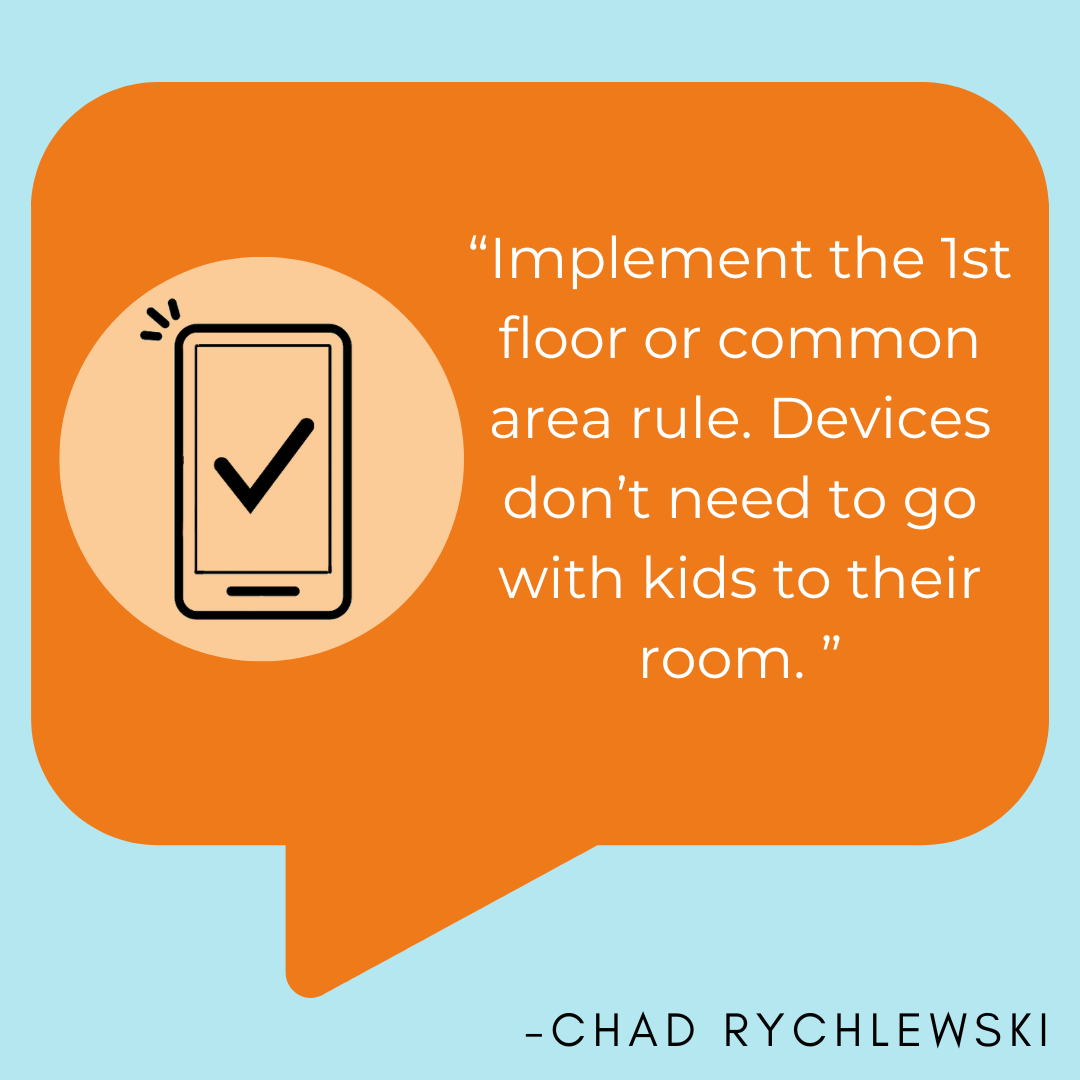
Love the question. Love how you end the episodes too. So realizing that every home might be, uh, built the same, we'll call it the, the common area rule. Some might have heard it as the first floor rule. Devices don't need to leave those common areas. Devices shouldn't go to the rooms at night. Children don't need to be doom scrolling. Well, we might all doom scroll, let's not let them live through that same mistake, right? So my house, it has the, the whole first floor is just all common area, living room, kitchen, so on. All the bedrooms are upstairs. We'll have a basket on the counter where the devices live before everyone goes upstairs at night. Devices go in the basket and I charge them because everyone needs a full battery. But that seems to help quite a bit. Um, I'd recommend trying it, it, it definitely helps kids get off the devices and gives us some peace of mind when we're sleeping ourselves.
Hillary Wilkinson: (23:34)
And I like how having that basket on the counter, it becomes, um, it kind of breaks that habit of continual digital connection in the home. It hearkens to the day of the landline, right? Where we weren't continually connected. So it just allows for more presence. I like that a lot. So as always, you can find a complete transcript of this show by visiting the show notes for this episode@healthyscreenhabits.org, as well as a link for how to buy the book, cyber Smart Parenting, and a link to cybersecurity parents LLC. Uh, like I said, do this by going to healthy screen habits.org. Click the podcast button and find this episode. Kae, Chad, thank you so much both for being here and for working to keep families safe and providing such a great resource for families. Thanks
Kae David: (24:31)
For having us. Thank you so much for having us.
Hillary Wilkinson: (24:37)
For more information, you can find us on Instagram and Facebook at Healthy Screen Habits. Make sure to visit our website healthy screen habits.org, where you can subscribe to the show on Apple Podcasts or via RSS so you'll never miss an episode. It's free, it's fun, and you get a healthy new screen habit each week. While you're at it, if you found value in this show, we'd appreciate you giving us a quick rating. It really does help other people find us and spread the word of healthy screen habits. Or if you'd simply like to tell a friend, we'd love that too. I so appreciate you spending your time with me this week, and I look forward to learning more healthy habits together.
About the podcast host, Hillary Wilkinson
Hillary found the need to take a big look at technology when her children began asking for their own devices. Quickly overwhelmed, she found that the hard and fast rules in other areas of life became difficult to uphold in the digital world. As a teacher and a mom of 2 teens, Hillary believes the key to healthy screen habits lies in empowering our kids through education and awareness.
Parenting is hard. Technology can make it tricky. Hillary uses this podcast to help bring these areas together to help all families create healthy screen habits.
Recent Episodes