

S16 Episode 9: Online Gambling and Teens: What Parents Need to Know // Amy Adams, LCSW
Hosted by Hillary Wilkinson
“[Predictive markets] is simply another way to say gambling that sounds more alluring, that sounds exciting. It is gambling.”
-Amy Adams, LCSW
Online gambling is becoming increasingly difficult to ignore. From sports betting apps to online casino games and the rapidly growing world of predictive markets, gambling is showing up in our phones, our sports coverage, our entertainment, and even the conversations happening around the family dinner table. But what exactly are predictive markets, and are they really investing—or simply gambling under a different name?
Amy Adams, LCSW, breaks down the different forms of online gambling, explains how predictive markets work, and explores why these platforms can be especially appealing to young people. She takes a closer look at the adolescent brain, the influence of sports and video games, and how features like loot boxes and variable rewards can introduce kids to gambling-like experiences at an early age. This isn't a conversation about fear or blame. It's about awareness, connection, and giving families the tools to navigate a changing digital world.
Listen now!
Healthy Screen Habits Takeaway
Resources
Resources mentioned on this episode
Gamblers Anonymous:
https://gamblersanonymous.org/
GamAnon:
Netflix InstaDocs:
Show Transcript
Hillary Wilkinson: (00:36)
I am so excited to introduce our guest today, not only because she's an expert in Healthy Screen Habits, but she's also one of the people who brought this organization to life and someone I'm lucky enough to call a friend, Amy Adams is a digital wellness educator, a licensed social worker, writer, advocate, and the chief financial officer of Healthy Screen Habits. She's one of our four founding members and a co-author of Healthy Screen Habits for Tweens and Teens Handbook. There is no one I can geek out on neuroscience, technology, the human condition, and more than Amy. And today, we're talking about the thing that has been consuming our conversations lately, predictive markets, AKA online gambling. Can't wait to get started. Welcome back to the mic, Amy.
Amy Adams: (01:33)
Thanks for having me, Hillary. I'm excited to talk with you today.
Hillary Wilkinson: (01:36)
Same. Okay, so Amy, I feel like life was moving along and then all of a sudden it's like, what happened? Why are we seeing so much online gambling today?
Amy Adams: (01:50)
Okay, I think we're all feeling a little bit like this, but I'm gonna take you back in time a little bit and just kind of explain the history of how we got to where we are right now. So let's go back to 1992 and in, in that year, Congress passed something called the Professional and Amateur Sports Protection Act. Okay? And it's like a big mouthful, but what that did was it effectively banned most sports betting outside of Nevada. Okay, so for years and years and years, if you wanted to bet on sports, you had to physically go to Nevada to a place and bet. Okay. Now, we're gonna fast-forward a little bit to 2012. Then New Jersey governor Chris Christie was trying to boost Atlantic City's economy and he signed a bill expanding sports betting to license location in, in his state. Well, as you might imagine, there was people that were very upset about this, principally all of the sports leagues.
Amy Adams: (02:49)
Mm. They were really... So you got the NFL, you've got the NBA, you've got the NHL, and they were all up in arms about what he was doing. So they sued him. They sued the state. And of course, as most things happen in the court of law, that took a very, very long time to get resolved. And finally, in 2018, it wound its way all the way up to the Supreme Court, at which point the Supreme Court overturned this PASPA, as the acronym of it is, and that actually opened up the way for states to do sports betting. Okay, so like I said, the, all the leagues, the sports leagues were initially very, very, very anti this, okay? You've got the former NBA player who turned Senator Bill Bradley screaming in Chris Christie's face at a, an event, him saying, "I'm not an animal to be bet on." And you had booing and you had all of these things.
Amy Adams: (03:44)
And then once it was legalized by the Supreme Court, something shifted. It was like all of a sudden, people were like, "Oh, well, maybe this isn't so bad." And what it did is it gave all the states kind of the rights to decide for themselves, do we want sports betting in our state, you know, online betting? Do we want these things? And so various states have chosen different routes, um, but it just kind of, the floodgates were open. And for the last couple of years, you know, eight years since 2018, we've seen just the proliferation of all this stuff. You can't turn on your TV now without seeing an ad for one of these big, big dogs, right? The sports leagues went from being totally opposed to it to actually embracing it. Mm. Um, and, and in fact, not only did the sports league embrace it, but it seems like everyone in Ameri- American society embraces it.
Amy Adams: (04:40)
So for example, like right now, LeBron James has a relationship with Polly Market. You've got Timothy Chalamet as the face of Kelsey is in a series of new ads, and Kalshi actually sponsored the World Cup. So it's everywhere. It's just kind of in your face. Well, what happened that really kind of tipped it over the edge was in March of 2026, so this year, there was an article published in the Atlantic by an, uh, writer named McKay Coppins, and it was called Sucker, and it was, it's a really long article, really, really good. And he kind of just opened up the eyes of the public to this huge, huge, huge widespread problem right now. And then we've had recently, as of last month, we had the New York Times, um, doing kind of an expose on DraftKings and just kind of exposing it. So all of a sudden now it's everywhere in our pockets, on TVs, the opportunities are everywhere, and now we've got people actually talking about it.
Amy Adams: (05:34)
So, uh, just to give you some figures here, because this is interesting. So in 2017, remember, this is before this, this bill was overturned. So in 2017, Americans legally wagered $5 billion on sports, mostly through places like Vegas, right? In 2025, that went up to 160 billion, okay? Wow. We now have 55% of adults that gamble at least monthly. One eighth of adults gamble every day. Now, 80% of people, they know that they'll lose money, but 50% of them think that they are special enough to actually be the ones to win. They're
Hillary Wilkinson: (06:19)
Gonna beat the house.
Amy Adams: (06:20)
Yeah. So people kind of... Like we've always known that gambling is like the house always wins, but then we think we're special and that it won't affect us. And we actually know the statistic is that that is true. 98% of people who bet on sports will lose money over the long run. And just so we know demographics here, uh, men make up 70% of sports betters in the US and 98% of problematic gamblers are men.
Hillary Wilkinson: (06:49)
Hmm. So
Amy Adams: (06:50)
It - That's really... A former ESPN reporter said, "The betting apps are in charge and everyone knows it. The leagues are hostage to the forces they unleashed."
Hillary Wilkinson: (07:02)
Wow.
Amy Adams: (07:03)
So here we are.
Hillary Wilkinson: (07:04)
Yes. Here we are. That's, I mean, I, I knew, but I didn't know, you know? Yeah. So thank you for giving us a little history lesson in that. The two companies that I'm aware of, you've already mentioned, which are DraftKings for sports and Kalshi for Predictive Markets. And that's only because of exactly like you said, just because those are the ads that have been the most attention getting for me. And it's probably because of all the celebrity endorsement, if I'm very honest, you know? I mean, they, they know what they're doing. But are there others that we should be aware of?
Amy Adams: (07:41)
Yeah. So the couple of the big dogs for the, the sportings, the sports betting would be, like you said, DraftKings, FanDuel, and Fanatics. Those would probably have the biggest market share for that. The predictive markets, the biggest guys for that would be Kalshi and PolyMarkets.
Hillary Wilkinson: (07:57)
Yeah. So if anybody's seeing charges like that come up on credit card bills or anything else like that, it might be worth a conversation. Yeah. So using terms like predictive markets or like other things, what are all of these different types of options for online gambling?
Amy Adams: (08:15)
Okay, that's a great question because it's not just one thing, right? So we can, we can kind of classify this whole online phenomena into three different categories. So, and we'll talk about each of them. Number one would be online casino games. Those are things like, you know, traditionally what you think of when you think of Vegas style games like Blackchat and slot machines and roulette and things like that where, you know, you can win a couple bucks, you can win a lot of money, whatever. But those are kind of the more traditional ones that, that people can bet online, right? Just from the convenience of your own cell phone right there in your hands. Um, the second category are the online sports betting apps, and those would be the DraftKings, the FanDuel, right, the Fanatics, and, um, and that's specifically centered on sports. And then you have something called Predictive Markets.
Amy Adams: (09:10)
And tho - that is kind of what's taking the world by storm. You really can't turn on anything or open up your device without being bombarded by this. So this is the one that i- is a little bit confusing to people, and I'm gonna tell you a little bit about it. So it differs from traditional gambling because you're not betting against the house/ you know, sportsbook here. Mm-hmm. You're actually betting peer-to-peer. And so it's... The company takes a cutoff of it, you know, but it's, it's kinda confusing because all the states have different rules and the companies, all these companies kind of morph around each rules of the state. So for example, in my home state here of California, we did not, we do not permit, or California does not permit sports betting, okay? So DraftKings has a little chunk of their market that is a predictive market thing instead of...
Amy Adams: (10:03)
So it's not technically called sports betting, it's a predictive market, which is legal. So it's, it's all a little bit confusing. But the thing with predictive markets is that you can literally bet on anything. Yes. You can bet on the weather, you can bet on whether a country will be invaded and will go to war. You can bet on politics. Mm-hmm. You can bet on whether the second coming will happening, will happen this year. It's, it's literally everything. And it's interesting because if you look at their websites, it's very much set up kind of it looks like stocks, right? Mm-hmm. You kind of, it kind of has the illusion of feeling like a legitimate real thing, like I'm betting on a company or whatever, but, but it's really, you know, they call... And they call them fancy terms like event contracts and they're making trades.
Amy Adams: (10:54)
But let's be very clear, it is gambling called by a different name.
Hillary Wilkinson: (11:00)
Yeah.
Amy Adams: (11:02)
You're not building a company, you are not, you know, investing in anything. It is simply another way to say gambling that sounds more alluring, that sounds exciting. It is gambling.
Hillary Wilkinson: (11:15)
So Amy, I listened to all of this and I really... I kind of like, can you explain what, like, why should I care? What's the problem with, with this type of gambling?
Amy Adams: (11:26)
Yeah, that's, that's a really fair question. And I... There's a lot of problems with gambling, right? And there was a... McKay Coppins in his article talks about how in all societies since basically the beginning of time, we've erected fences that protect us against gambling because it's been known to cause problems. And what's happened in this most recent iteration in our times is that we've taken away this fence when the Supreme Court overturned it without really considering why the fence was there in the first place. So let's just talk about why that fence has been traditionally in our societies that have, you know, highly stigmatized gambling. First of all, it's built on getting something for nothing and every time you win, someone else loses, right? Um, and it doesn't, it doesn't build anything in you. It just takes away... And it promotes just kind of like doing nothing, idleness and sloth and, you know, it's, it makes you greedy.
Amy Adams: (12:23)
He was saying in his article, which was found so interesting, he said, "You know, I don't re - I didn't really think that much about money before, but it made me think about money all the time." Oh. But to me, uh, uh, s - the, the telltale sign of really the problems is that in the, in the states that have legalized this, there have been substantial increases in things like bankruptcy, debt sent to collections, use of debt consolidation loans, and loan delinquencies, in addition to, you know, calls to hotlines, the gamblers' hotlines have gone up tremendously. And actually, it's really interesting what the data tells us is that people with gambling addictions have the highest rates of suicide more than any other addictions.
Hillary Wilkinson: (13:09)
Wow.
Amy Adams: (13:10)
Okay? 'Cause think about it, you could lose your home in the blink of an eye where one debt or, you know, one gambling, one bet, you know, gone wrong. Um, but it's s- something else that's interesting, it, it kinda creates rage. So something that you, to think about is that a lot of athletes now, they have to protect themselves against raging, you know, losers. When I say losers, I mean people who have lost money on them. They're getting death threats, they're getting... And so it makes you have this rage towards other people, but even worse, it kind of corrodes your soul because everything becomes reduced to a transaction. And I refer to that earlier. What happens is, you know, we talked about these predictive markets where you can bet on a war or you can bet on an invasion. So let's say you bet that a certain country will invade another country, and that does indeed happen.
Amy Adams: (14:01)
You now are earning money from someone else's misery. And when we think about any country being invaded, y- your natural response as a human being is to feel s- sorrow that someone's life is, uh, getting, you know, destroyed and homes ruined and stuff. But now if you bet on it, you're not thinking about the human cost, you're only thinking about you l - winning. And, and when we reduce other people to money and to transactions, that's when the, like, the whole soul of our society starts to feel corroded. And that's really the, the greatest harm, I think, of what gambling does, is it reduces us to transactions.
Hillary Wilkinson: (14:41)
Yeah. And I think it was very well explained on one of the Netflix Instadocs that, um, just recently came out. I'll put that link in the show notes. Instadocs are just like a 30-minute deep dive documentary into, like, what's happening in the world right now. So if you have Netflix, you could go and look for it. And it, um, it did a very good job of explaining to me how dangerous this this can be, including some politicians that were known to have bet on whether they were showing up at particular, you know, making appearances at particular spots. So they actually knew what their schedule was. So they're truly gaming the system on, you know, on basically shorting whether or not they're, they were gonna be at this event, and then what do you know? The day of the event, they show up at, you know, some other airport or something.
Hillary Wilkinson: (15:44)
So interesting.
Amy Adams: (15:45)
Yeah. It's insider trading at its finest, right? Uh-huh. And it's also... I mean, it's problematic on many levels, but on just a humanitarian, basic humanity level, we're betting against things like invasions and war and reducing everything to transactions and commodities. I mean, that's... We can talk about that in a little bit, but that's... It's, it's quite alarming.
Hillary Wilkinson: (16:08)
Yeah.
Amy Adams: (16:09)
Everything is becoming a transaction.
Hillary Wilkinson: (16:11)
Speaking of transaction , we have to take a break. But when we come back, let's talk about all of this is starting to affect family dynamics as well.
—--------------
Ad Break: 988
—---------------
I'm speaking with Amy Adams, fellow healthy screen habiteer and licensed social worker who has got a bead on the modern family like no one else I know.
Hillary Wilkinson: (17:31)
But one of the things I wanted to talk to you while I have you, Amy, was this, how dads in particular are using these apps as like bonding methods with their kids.
Amy Adams: (17:45)
Okay. So, and McKay Kaufman's brings this up in his article, but it's really interesting. So when, you know, boys grow up and it becomes a little bit more tricky to relate dad and son relations, it has become something that they can bond about because a lot of boys and their dads watch sports together. And so the dads get these great i - this great idea of like, "Oh, well, we could, we could bet on these games and we can bond while we're doing this."
Hillary Wilkinson: (18:11)
Yeah, get some skin in the game, make it a little more
Amy Adams: (18:13)
Interesting. Right. So here's the dangerous catch and why this is so problematic. When they... So the dad puts up the money. They're... He's not asking the son to put up any money. So dad puts up the money, and when they win, you know, maybe they split the money fifty fifty. They win 50 bucks, they each take 25. But when they lose, dad is absorbing all those losses. And so the kid thinks, "This is like a win-win situation for me. When we win, I get money. When we lose, I don't lose any money. So it doesn't, it doesn't hurt. It doesn't feel bad. It feels really fun." And it is, you know, it's fun for them to, to bond. However, what happens is then it gets him kind of stuck on this pattern, whatever you wanna call it, possibly leading to addiction. And once he realizes, "Oh my gosh, this is actually costing me money, it's almost too late."
Hillary Wilkinson: (19:04)
Yeah. And let's talk about how those patterns/habits get kind of set up where I've seen, like I said, on TV or on, you know, like a common thing that I will see on Netflix is DraftKings advertising, "Spend $5, win 200." And like, there's... It's almost a guarantee. And like, why is this particularly problematic?
Amy Adams: (19:32)
So this is, this has been a, a topic that was just recently written about in the New York Times, like I referred to at the beginning of the podcast. This is all this, this advertising, right, of, you know, spend a little bit, gain a lot. Basically, the whole premise of gambling is something for nothing, right? Mm-hmm. Just spend a little bit and get a lot. But I really feel like gambling ends up being nothing for something. You get nothing and you spend a lot of money. So let's talk about DraftKings in particular, because those are those ads that we see. Um, w- what they've done is they've built models to identify those they could... That are losing the most, and then they target those losing gamblers with ads and more promotions that encourage more betting. So everyone sees the initial one. I mean, that's, that's kind of in your face, but as you start to lose more and more, those ads, you get more and more and more ads.
Amy Adams: (20:26)
And, um, you know, you know, they interviewed, like, 40 former employees, and one of them, you know, the- these are all anonymous, but one of them, the former employee said, "If you lose, we give you more so you keep playing more." And he said, "The core question is, is this person going to give us more than we're giving them? And if the answer is yes, open the floodgates."
Hillary Wilkinson: (20:48)
Wow. So it's... It's truly predatory practices. It's
Amy Adams: (20:51)
Truly predatory. And it's open. And, and the great thing is that thank you to the New York Times because what that article did was it opened up all of this inquiry and questions. So now you have all these states looking into it. In fact, we have Senator this morning when I opened up the New York Times, um, there was an article in there about kind of the fallout from this. And we've got, you know, senators basically demanding answers from DraftKings saying like, you know, these are predatory practices and stuff. And it's especially frightening because it's all using, you know, machine learning AI, right, to target those who are most vulnerable. In fact, um, they talked about this one man who, you know, he, he realized he had a problem, he tried to quit, and he said it was one... When he tried to leave, within, like, hours, there was just tons and tons of...
Amy Adams: (21:41)
His email box was just flooded with promotions from DraftKings. "Come back, come back, come back." Mm-hmm. "We'll give you, we'll give you free this, or we'll guarantee this," whatever. And so it's almost like, you know, these people don't have a chance because the, the, the AI models kn- know that they're the most lucrative customers, because remember, all these platforms are set up for you to lose money. Yeah. That's the only way that they make money is by taking yours.
Hillary Wilkinson: (22:08)
So, um, I know that you have broad brush strokes of knowledge across, like, various families, various types of brains, and how they act, whether they be, you know, ADHD brains or any other type of thou- thought patterns we can think of. You, you're very good at acknowledging all of them. And what I would like to know is, are there people who are more susceptible to having problems with gambling? Like, are there people who are more susceptible to online gambling?
Amy Adams: (22:43)
Okay, great question. And we'll talk about two main groups that I'm really concerned about. And when we talk about these groups, I never want to make the mistake of leaving out other groups, because if you have a problem and you don't fit into this, you know, stereotypical group that usually has problems with thing, you feel like, "Oh, I'm especially... There's something especially wrong with me." So yes, women and girls can and do have problems with gambling, um, but right now, I would say my biggest concern is for adolescent boys. And of course, I have some of those in my own house, so that is, o- of course, something I'm thinking about a lot, right? Because... And I'm gonna tell you, I'm gonna tell you why I'm so concerned about boys, because they're really, really going after them really hard. Um, there was an article written about ESPN, and they had this whole on...
Amy Adams: (23:37)
ESPN had this whole tab of, like, how to get sports betting, how to start gambling, basically. And it was full of, like, bright-colored things and flashing things and almost, like, childlike, I don't know, you know, things popping out. And it's like, okay, if that isn't, like, a predatory practice targeted towards young people, I don't know what is. And if you think about, they're targeting people who really, really like sports. So you've got boys that are, from a really young age, have done, like, fantasy leagues and, and stuff. Mm-hmm. And so, and remember the other thing is, is video games. And both of those kind of setup boys, it's the perfect... Video games plus sports are the perfect storm to be handed, uh, you know, over to the sports betting people. Okay, and I'll tell you why, because they actually did a study about video games, and it was really interesting.
Amy Adams: (24:29)
They said that nearly half of the games that, that are most popular actually technically meet the definition for gambling, which is kind of surprising, but let me explain what that means, because, um, the criteria for gambling was, is, is known as an exchange of real money for valuable goods with an unknown outcome that determined at least partly by chance. Now, think of these games that are offered to kids right now that are currently playing that you wouldn't think of as traditional gambling, but a lot of games have something called loot boxes in them. Mm-hmm. Mm-hmm. And loot boxes, you pay with real money, okay, and you don't know what might be in that loot box. It might be something good, and it might be something not so good, but it's, uh, it's a, it's a chance you take, right? Well, that is gambling,
Hillary Wilkinson: (25:20)
Ladies and gentlemen. And we know, and we know that variable rewards - uh-huh. Are inherently more compelling than - Uh-huh. Than a, a standard.
Amy Adams: (25:29)
So you're priming kids at a really young age to be served up for more and more intense forms of these variable rewards, okay? Um, and, and it's like, it's, like you said, it's the intermittent reforce - in reinforcement which keeps people coming back, right? Mm-hmm. So, and we know, I mean, this is a crazy statistic, but by age 11, one third of boys have gambled.
Amy Adams: (25:57)
Wow. One third, okay, um, by adolescents, and then we know that 40% have played some sort of simulated gambling game. Like, even if it's not for real money, it, it could be, like, you know, pull the tab and get something, whatever. So it's, it's setting up their mind to kind of be thirsty for this, for more, for more, for more. Mm-hmm. And, and then it just... Then suddenly, it becomes more. Now, you know, sure, they have gambling apps have age limits, and there's all different, different states have different age limits, but when has that ever stopped any teenager ever from using them? And if parents think that their kids are safe because they're underage, I just wanna disabuse you from that though that y- your child can lie, and I know of several that have. Um, but let's talk about something else in adolescence that makes, you know, m- makes adolescent boys particularly vulnerable for this too, and that's something called hyper-rationality.
Amy Adams: (26:54)
That's, that's a term coined by, um, Dr. Dan Siegel out of UCLA, and what that means is kind of... Strangely enough, it's kind of the opposite of impulsivity, because what it is, is it means that they've consi - your brain, the brain has, like, considered the options, like, "I know there's good, and I know there could be something really good, a reward, and I know there could be something really bad, like me losing money, but adolescent brains tend to focus more on the rewarding aspect." So they might know that they only have a 5% chance of winning, but they really, really, really, really believe that they're gonna be in the 5% chance. They're the special 5%ers. They're the... And I kind of refer to that at the beginning, but in adolescence, it's even more pronounced. That's just part of the brain reformatting and growing and expanding.
Amy Adams: (27:40)
And then there's something else, um, Dan Single - Siegel talks about the essence of adolescence, which is a big acronym, but the N in essence stands for novelty. Adolescents are very much primed to want to do anything new and exciting. And I can't think of anything more new and exciting than every new game that comes on, and every, you know, whatever, every chance there's... Every day brings a new chance to bet on something new and different, and you can m- make game, you know, make bets not just on the outcome of the game, but you can make bets on how many touchdowns a certain player will get, or, uh, you know, how many runs someone will get. There's so many options, so it's novel every single time. And- And we refer to adolescent brain as the learning brain, right? They're... So, so they're more susceptible to rewards and more at risk to developing addictions.
Amy Adams: (28:34)
We know that most people that have addictions trace them back to adolescents. It's just the way our brain... In, in fact, that number is 90%. So 90% of the people who have addictions started using the substance or having the behavioral addiction before the age of 18, okay? Wow. Now, there's also something we, we call differential susceptibility, meaning that some brains are more susceptible to stimulus than others. So let's now ref - go to some of our neurodiverse crowd, but in particular, our ADHD friends. So they're always looking for more, like, dopamine pushes, right? They're looking for very dopapinergic, um, activities. So things that give them, like, a rush really, well, I can't think of anything that would give me more of a rush than winning the possibility of winning money, right? And so these kids are even more likely. So, you know, risk factor, you're... I- if you're adolescent, if you're an adolescent boy who likes sports or video games, and then if you're an adolescent boy who also has ADHD...
Amy Adams: (29:36)
And I'm not trying to be dooms and glooms, I'm just trying to raise awareness that this is, this is why this is happening.
Hillary Wilkinson: (29:43)
Yeah. I mean, you've given us a lot of, like, really good big thoughts because you're really good at that. But, you know, I'm, I'm the mom on the street. Yeah. And what I have been sitting here listening to you and thinking about is, like, also how Being able to speak with fluency about athletics or even some of this gambling, it's also kind of this bridge into adult land that adolescents are drawn towards kind of like, "Oh, I can, I can speak the same language as that and even be, even be, you know, quite knowledgeable in some of those things." So I can understand also just the draw of that if you're somebody who wants, wants to fit in with the adults at the table. Yeah. You know? Yeah. So at Healthy Screen Habits, we always try to come from place of help and hope.
Hillary Wilkinson: (30:42)
You, uh, you mentioned you didn't wanna be doomer gloomer on that last part. And I'm in agreement with you. Do you have any, um, tips for us or help on what we can do if I have a family member who's being affected by online gambling? What can I do?
Amy Adams: (31:04)
Okay, that's a, that's a great question. And there's actually, you know, with it being this, you know, bigger and bigger problem, I think there's more and more awareness and there's more and more resources out there. So the biggest one I would say the most helpful thing is Gamblers Anonymous, um, for the actual gambler, right? But there's also Gamanon, and that's similar to like Al-Anon, which is for the family members or loved ones of gamblers. Mm. So if you're struggling with a family member, just, you know, Google that. Look that up. Once again, it's Gammanon. I'll put
Hillary Wilkinson: (31:41)
That, I'll put that link in the show notes too.
Amy Adams: (31:43)
And then specifically for, you know, our listeners here in California, there's a website called calpg.org, and that is for problematic gamblers here in California.
Hillary Wilkinson: (31:56)
Okay.
Amy Adams: (31:57)
There's also, um, self-exclusion forms that you can fill out. And those will vary state by state, because unfortunately we don't have a national self-exclusion form, but let me explain a little bit what self-exclusion forms do. Um, if you recognize that you are struggling and have a problem and you want to, you know, exclude yourself from certain platforms from taking your money, you can fill out a form and that will mean that you online cannot, you know, play those games or gamble on those sites.
Hillary Wilkinson: (32:29)
Oh, so you can build in a layer of protection
Amy Adams: (32:31)
There. So you can build in a layer of protection. Now, some countries actually have, have even more robust, you know, legislation than we do. I know like in the UK, they can, you know, certain, their banks will basically not allow transactions coming from gambling websites. Um, and I, I'm, I don't think we have that really yet, but I know that that's, uh, what other countries are doing. But, but certainly as awareness grows, there's gonna be more options for help. But I, I wanna, I want people to know that there is help out there because this is a problem and it really is affecting a lot of people. So I don't want anyone to feel alone. Um, I just, I wanna normalize the fact of it, as much as you see it on TV, you know that there's gonna be an equal number of people that are struggling with the problem.
Hillary Wilkinson: (33:18)
Yeah. Thank you for that. When we come back, I'm gonna be asking Amy for her Healthy Screen Habit.
—-----------
Ad Break
—-------------
Hillary Wilkinson: (34:26)
I ask each guest for a healthy screen habit, and Amy is no different. So Amy, as you know, this is going to be a tip or takeaway that listeners can put into practice in their own home. What's yours?
Amy Adams: (34:41)
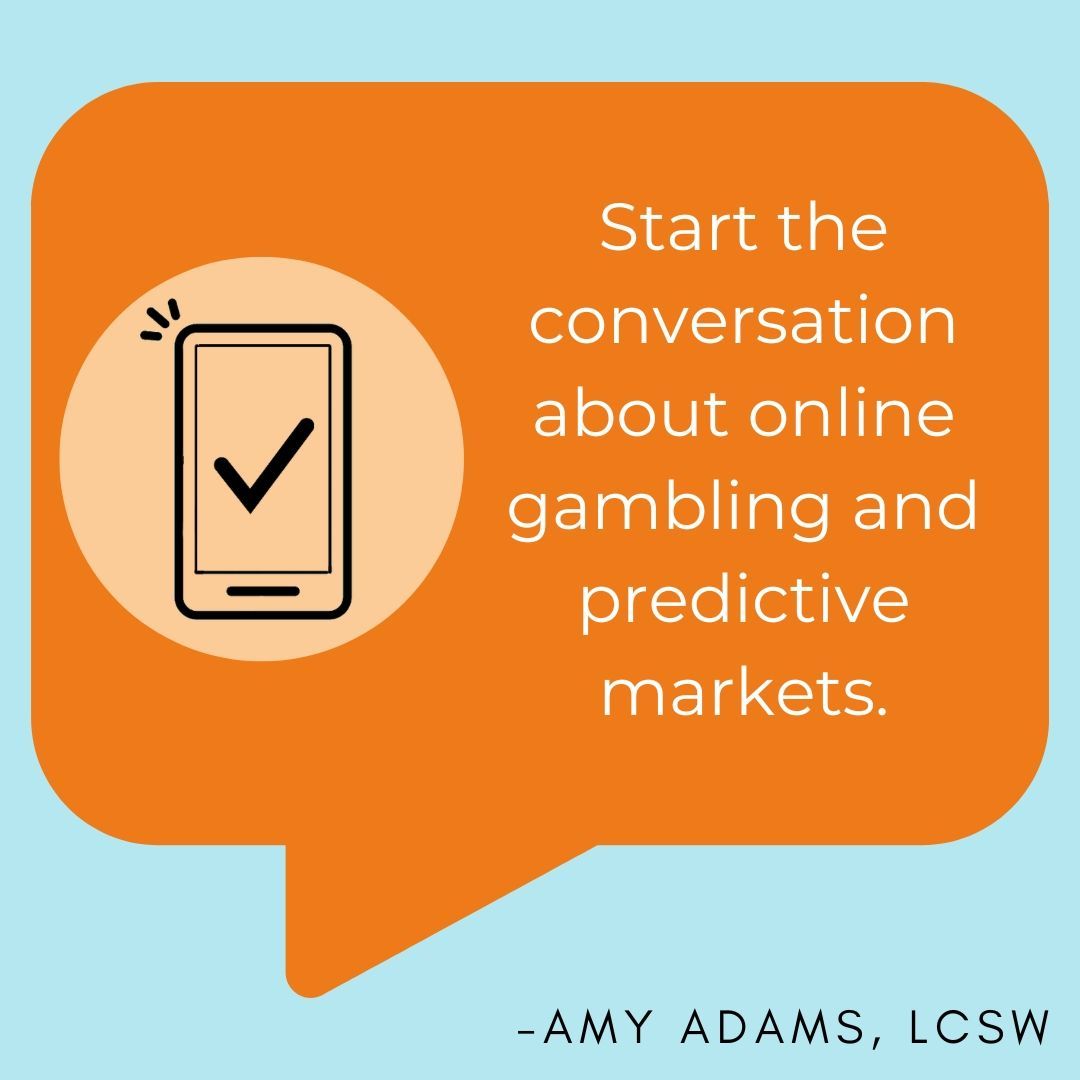
Okay. This is very simple, but I think it's the most basic and actually the most helpful thing you can do is simply open the dialogue. Start a conversation. Talk to your family. Talk to your sons, talk to your daughters, talk to your spouse, start the conversation.
Hillary Wilkinson: (35:02)
That, that's... It, it just goes back to how, like, when we started this episode, I think, let's just start at the very beginning. And that's always the best place to start, right? Yep. And I think, like you said, opening the dialogue is a great place to start. And lots of times when you come from a place of curiosity, it really puts your children in the seat or the person who you're trying to talk to in the seat of being the expert. And, um, that's kind of reassuring when you're the person who's being asked questions of as well.
Amy Adams: (35:38)
So - Yeah. And I love how you mentioned curiosity because I'm a big believer in that because we don't wanna come at it with, like, "You don't have a problem with this, do you?" I would ask more of a question of, "Tell me about your experience with this," or, "What are the kids at school doing with this?" Or, "Do any of your friends do this?" Or, "Have you tried this?" And when we come at it with curiosity versus judgment, kids are much more likely to, to talk to us. And then once we open that conversation, we need to continually engage in that conversation, because it's not a one and done, and we talk about this a lot at Healthy Screen Habits, right? Like, we... It's not just one conversation, "Okay, that was awkward and uncomfortable." We wanna have this ongoing conversation with our kids because it really, really, really is important.
Hillary Wilkinson: (36:21)
Yeah. Yeah. As always, you can find a complete transcript of this show by visiting the show notes for this episode. You do that by going to healthyscreenhabits.org, click the podcast button, and find this episode. Amy, thank you for coming on here, friend, to, uh, flesh out a lot of stuff that I didn't know about and share your knowledge. As we say, our mission at Healthy Screen Habits is to educate and empower others.
Amy Adams: (36:49)
Well, it's been a pleasure to speak with you, Hillary. Thanks for having me.
About the podcast host, Hillary Wilkinson
Hillary found the need to take a big look at technology when her children began asking for their own devices. Quickly overwhelmed, she found that the hard and fast rules in other areas of life became difficult to uphold in the digital world. As a teacher and a mom of 2 teens, Hillary believes the key to healthy screen habits lies in empowering our kids through education and awareness.
Parenting is hard. Technology can make it tricky. Hillary uses this podcast to help bring these areas together to help all families create healthy screen habits.
Recent Episodes